Turning Questions into Insights: How Evaluation Strengthens Arts Learning Programs
At Arts Ed Collaborative, continual inquiry is at the heart of our work, helping educators gather insights, refine strategies, and improve arts learning experiences for the communities they serve. Whether you’re launching a new initiative, refining an existing program, or looking to better understand participant experiences, our evaluation consulting services help turn your questions into meaningful insights.
Why Evaluation Matters
At its best, evaluation helps organizations move beyond assumptions and gain a deeper understanding of their programs. By gathering meaningful data and reflecting on what it reveals, educators and arts organizations can identify strengths, uncover opportunities for growth, and make data-informed decisions that strengthen arts learning experiences for the communities they serve.
Our Approach
We start with listening. We begin by learning about your program, the community you serve, and the questions you’re hoping to answer. These questions might include:
- To what extent are we implementing this program as intended?
- How are students benefiting from this residency?
- What impact is this program having on teacher practice?
Together, we clarify your goals and design an evaluation plan that aligns with your priorities, capacity, and budget. Depending on your goals and the questions you’re hoping to answer, we may utilize observations, surveys, interviews, focus groups, creative reflection tools, or other methods to gather relevant data.
Once we’ve analyzed the findings, we work alongside you to reflect on what we’ve learned, identify key takeaways, and determine practical next steps. Throughout the process, our goal is not simply to measure outcomes, but to help organizations gain useful insights that inform decision-making, strengthen programs, and support continuous improvement.
Evaluation in Practice
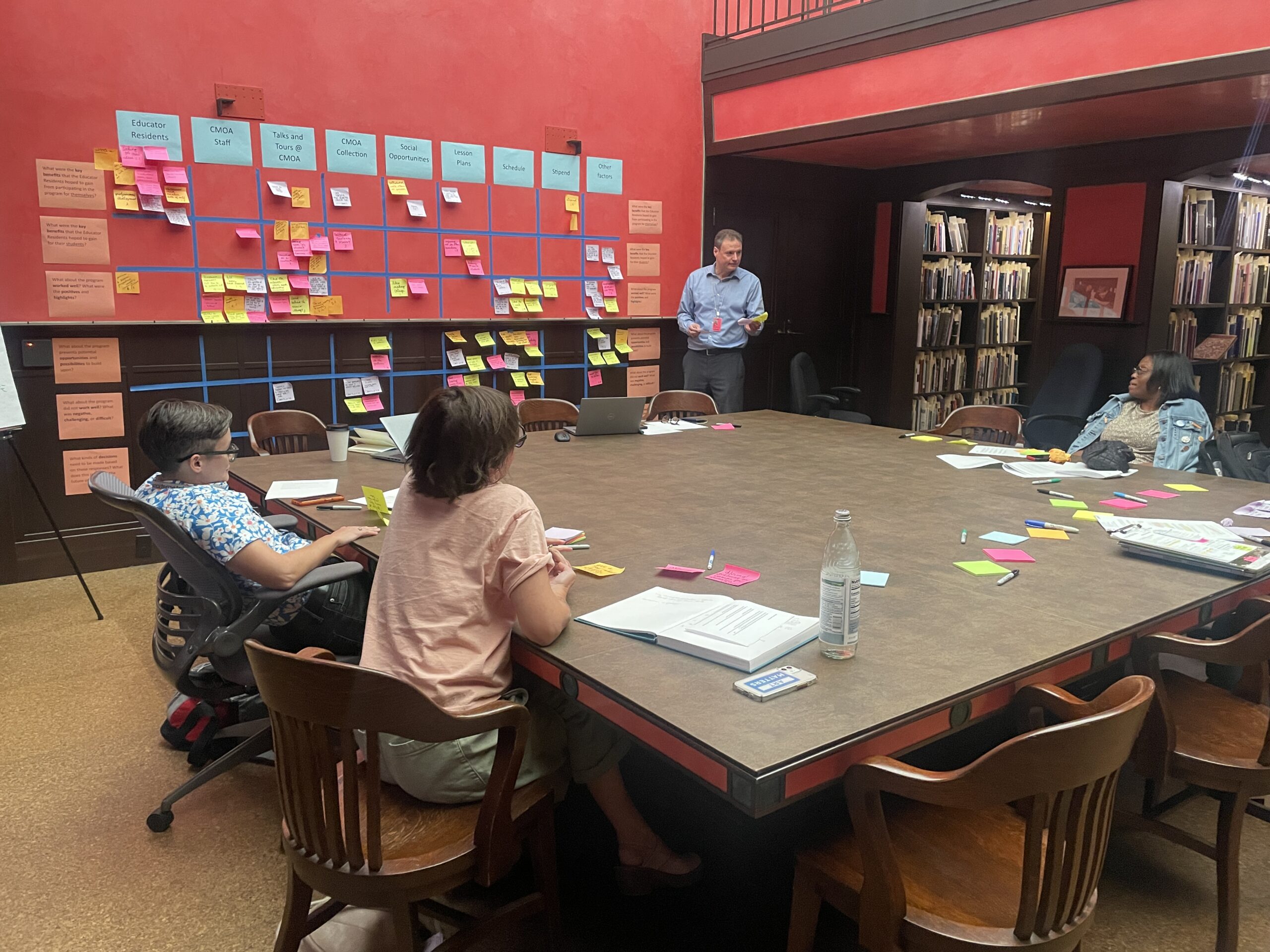
One recent project involved partnering with Carnegie Museum of Art to strengthen the design of its Educator Residency program. Museum education staff wanted to better understand participants’ experiences and identify opportunities to improve the program for future cohorts. To gather data, we met with two cohorts of residency participants each summer and facilitated conversations about the program’s benefits and challenges. We then synthesized participants’ written reflections and discussion transcripts into a shared set of findings.
Next, we facilitated a reflection session with program staff, who reviewed the findings, identified key themes, and considered potential responses. Through this multi-year evaluation partnership, staff used participant feedback to make program adjustments over time. Challenges identified by earlier cohorts were addressed and no longer surfaced as concerns among more recent participants. Beyond informing specific program changes, the evaluation process helped cultivate a culture of reflection and continuous improvement among the Educator Residency program team.
Let’s Start With a Conversation
Not sure where to begin? That’s okay. Evaluation starts with asking thoughtful questions. If you’d like to learn more about our approach or explore a question, challenge, or opportunity within your program, reach out to Matt Sikora at sikoram@artsedcollab.org to start the conversation.